
Home Addition Cost Calculator
Estimate your project by size, room type, finish level, and state in seconds. Built for homeowners who want a fast planning range before contractor quotes.
See low, average, and high planning costs in one view.
Size, finish, structure, and local labor move the number most.
Test different room types and finish levels before you request bids.
Reliable calculators show ranges instead of one fake exact number.
Explore the Main Cost Sections
Use these shortcuts to move quickly between the calculator, cost tables, state comparisons, and FAQs.
Advanced Home Addition Cost Calculator
Fine-tune your estimate with room counts, finish level, structure, system upgrades, local market factor, and custom scope allowances.
Step-by-Step Project Planner
Use the step-based calculator for a more precise planning range.
Step 1: Project basics
Set the location, addition type, finish level, and project size.
Step 2: Structure and site
Tell the calculator how complex the build path is likely to be.
Step 3: Rooms and systems
Customize the spaces and systems being added instead of picking fixed presets.
Step 4: Budget and planning buffers
Add permit path, custom allowances, markup, and contingency for a more realistic range.
What Changes Home Addition Cost the Most?
People searching for a cost of home addition calculator want more than one number. They want to know what pushes cost up, what stays relatively stable, and how to compare scenarios before they talk to contractors.
Room type
Bathrooms and master suites typically cost more than dry rooms because plumbing, fixtures, tile, ventilation, and finish labor make them denser and more expensive.
Size and shape
Large additions raise total cost, but small additions can look expensive on a per-square-foot basis because fixed permit, design, and mobilization costs are spread over less area.
Structure and roof work
Simple tie-ins cost less than second-story work, deep foundations, major roof reframing, or complex structural modifications.
Finish level
Builder-grade, mid-range, premium, and luxury projects can differ sharply once flooring, trim, tile, cabinetry, and fixture specifications change.
Mechanical upgrades
HVAC, electrical panels, plumbing lines, and ventilation can raise both scope and timeline faster than many homeowners expect.
Location
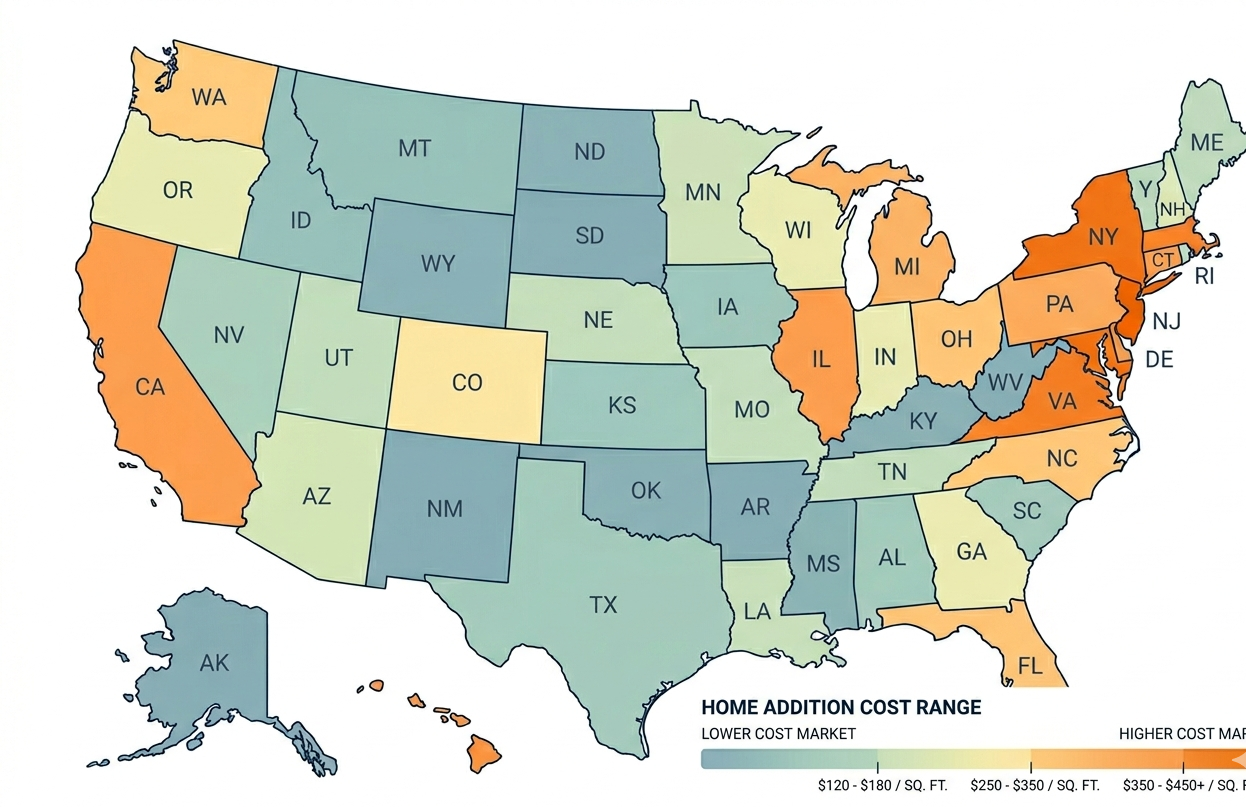
State-level labor markets, code requirements, and material logistics make a home addition cost calculator by state much more useful than a flat national average.
Home Addition Cost by Type
Different addition types carry different structural and system costs. Use these ranges to compare dry rooms, wet rooms, suites, and larger structural projects more clearly.
Bedroom addition
$100 to $250 per sq ft
Dry-room additions often cost less than suites and bathrooms, especially when plumbing changes are limited.
Bathroom addition
$130 to $300 per sq ft
Plumbing, waterproofing, ventilation, and finish density make bathroom additions some of the highest-cost room types.
Master suite addition
$150 to $350+ per sq ft
Primary suite projects combine bedroom space, bathroom scope, storage, and finish upgrades into a larger budget range.
Second-story addition
$150 to $350+ per sq ft
Vertical additions are often expensive because structure, stairs, roof work, and engineering become much more significant.
| Addition Type | Typical Cost Per Sq Ft | Common Size | Planning Range |
|---|---|---|---|
| Bedroom addition | $100 to $250 | 180 to 250 sq ft | $20,000 to $50,000+ |
| Bathroom addition | $130 to $300 | 60 to 100 sq ft | $25,000 to $75,000+ |
| Master suite addition | $150 to $350+ | 300 to 450 sq ft | $60,000 to $140,000+ |
| Sunroom addition | $80 to $200 | 180 to 280 sq ft | $16,000 to $45,000+ |
| Garage addition | $60 to $150 | 350 to 500 sq ft | $24,000 to $65,000+ |
| Second-story addition | $150 to $350+ | 700 to 1,200 sq ft | $120,000 to $350,000+ |
| Bump-out addition | $90 to $250 | 80 to 180 sq ft | $12,000 to $50,000+ |
Home Addition Cost Per Square Foot
Many homeowners specifically search for a home addition cost per square foot calculator. This section supports that intent while keeping the larger calculator and methodology on the same page.
Basic / standard finish
$100 to $160 per sq ft
Best fit for simpler layouts, fewer system changes, and more conservative material choices.
Mid-range finish
$150 to $225 per sq ft
The most common planning band for balanced homeowner projects with normal scope and finishes.
Premium finish
$225 to $350+ per sq ft
Useful for projects with higher-end materials, more complex structure, or expensive labor markets.
Popular Room Addition Sizes and Planning Ranges
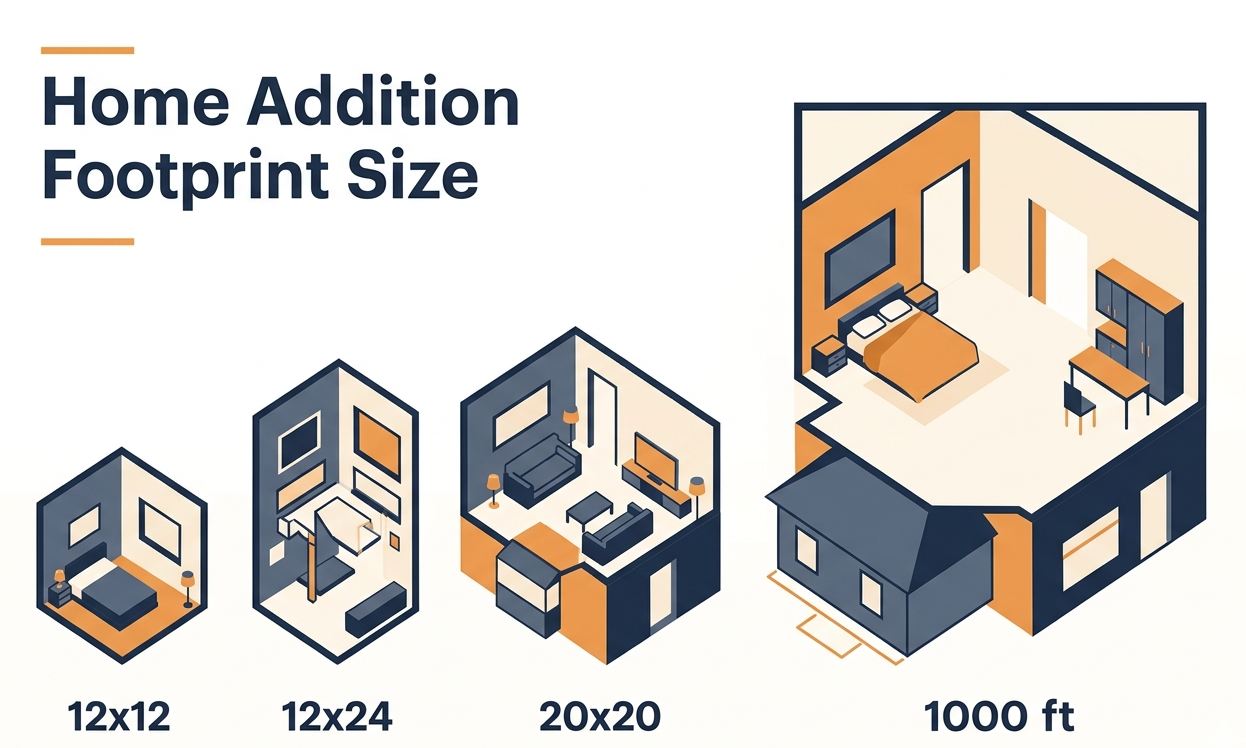
These size examples help you compare small additions, larger suites, and major expansion projects before you request bids.
| Size | Square Footage | Typical Planning Range | Common Use |
|---|---|---|---|
| 12×12 | 144 sq ft | $18,000 to $40,000+ | Home office, compact bedroom, flex room |
| 12×24 | 288 sq ft | $35,000 to $80,000+ | Bedroom suite, lounge, long footprint family space |
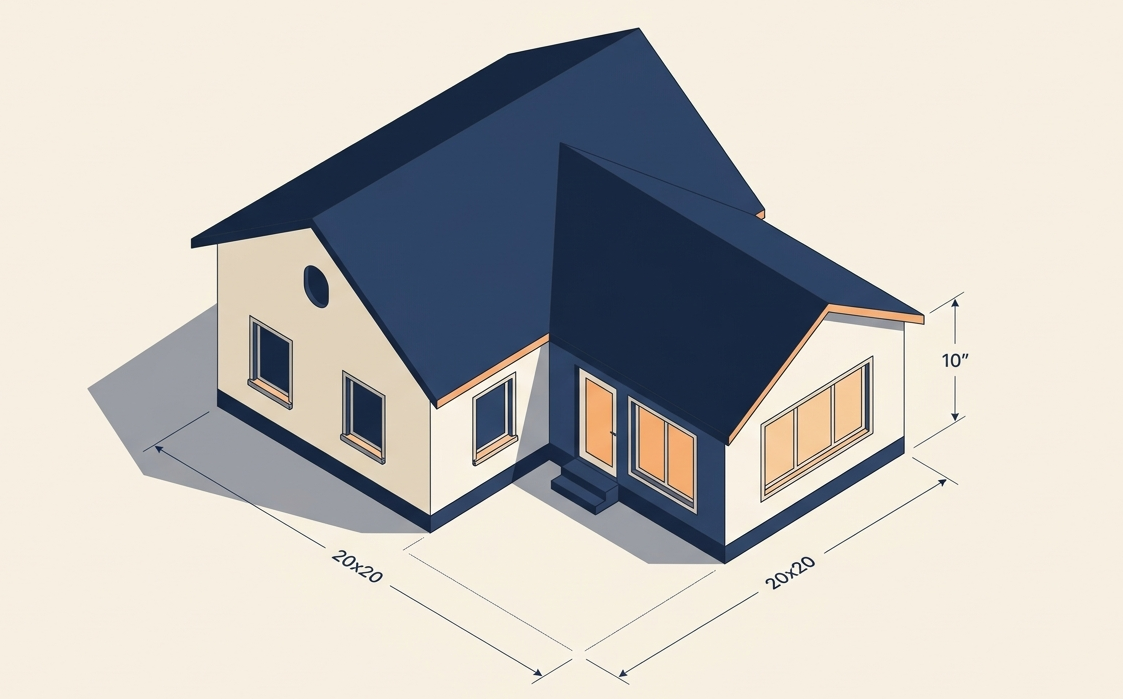
| 20×20 | 400 sq ft | $50,000 to $100,000+ | Primary suite, large living room, high-value expansion |
| 1,000 sq ft | 1,000 sq ft | $125,000 to $250,000+ | Major multi-room expansion or second-story project |
Home Addition Cost by State
Location changes labor rates, permit complexity, and construction conditions. Use this section to compare how state-level market differences can shift the planning range.
| State | Market Factor | Sample Mid-Range Cost / Sq Ft | Planning Note |
|---|
How We Calculate Home Addition Cost
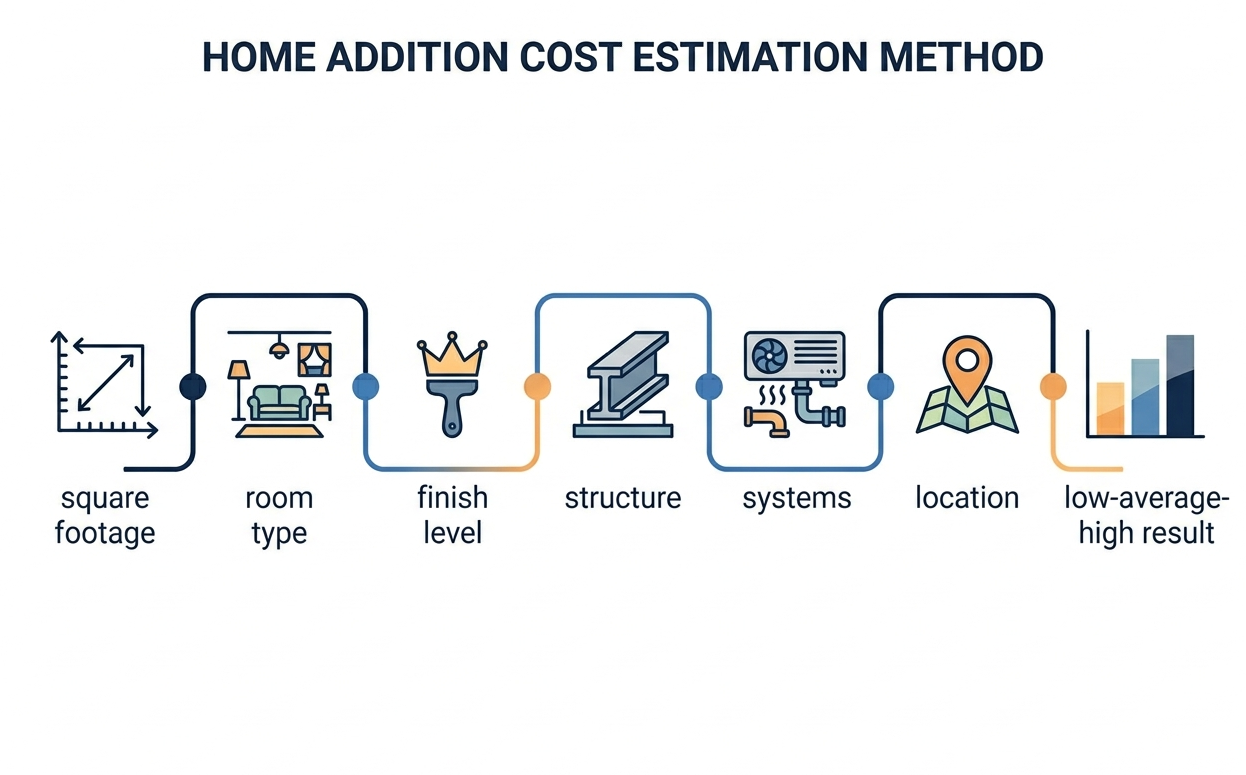
Transparent methodology makes the estimate easier to trust. This section explains how the calculator builds a planning range from size, type, finish level, structure, system work, and location.
Total estimate = ((square footage × adjusted build rate) + fixed project costs + system upgrades + permit/design allowance) + contractor overhead + contingency
What the calculator includes
- State-adjusted labor market logic
- Room type cost differences
- Finish level adjustments
- Foundation and roof complexity
- HVAC, electrical, plumbing, windows, and doors
- Permit, design, overhead, and contingency allowances
What this estimate does not promise
- It is not a signed contractor quote
- It does not replace site inspection or engineering review
- It does not model every city code detail or HOA requirement
- It does not guarantee final build cost or schedule
Why ranges matter
- Real projects contain unknowns
- Scope changes between planning and quoting are common
- Labor and permit conditions vary by market
- Complex finishes and structure can widen the spread
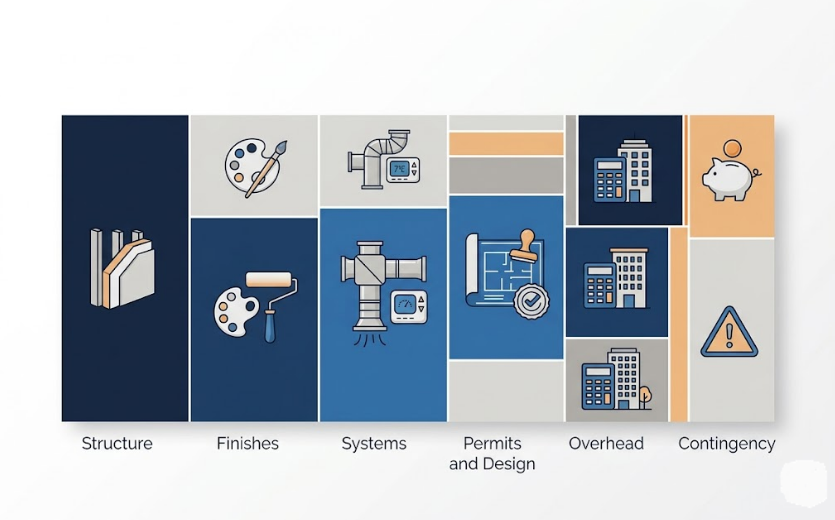
What Is Usually Included in a Home Addition Budget?
Many homeowners underestimate soft costs and system work. Keeping this explanation on the homepage strengthens trust and helps users understand why one estimate may be much higher than another.
| Budget Area | What It Covers |
|---|---|
| Structural shell | Foundation, framing, enclosure, roofing, siding, insulation, and weatherproofing work. |
| Interior finish | Drywall, trim, paint, flooring, doors, cabinetry, tile, fixtures, and finish carpentry. |
| Mechanical systems | Plumbing, HVAC extension, electrical wiring, panel work, outlets, switches, and lighting. |
| Soft costs | Permits, design fees, engineering, approvals, and inspections. |
| Planning buffer | Contractor overhead, profit, and contingency for conditions discovered during construction. |
Frequently Asked Questions
These FAQ answers are visible on the page and align with the schema file so the content stays honest, indexable, and consistent.
How much does a home addition cost per square foot?
Many standard projects land around $125 to $250 per square foot, but the real number changes with room type, finish level, structure, and location. Wet rooms and premium-finish projects often cost more than dry-room additions with simpler scope.
How much does a 20×20 room addition cost?
A 20×20 room addition equals 400 square feet, and many projects of that size land around $50,000 to $100,000 or more. Plumbing, premium materials, and high-cost labor markets can push the budget higher.
How do you calculate home addition cost?
A reliable estimate starts with size, then adjusts for room type, finish level, location, structure, permit and design scope, and system work such as plumbing, HVAC, and electrical. That is why a trustworthy calculator shows a range instead of one fake exact number.
What raises the cost of a home addition the most?
Plumbing-heavy layouts, second-story work, complex roof tie-ins, premium finishes, difficult site access, and expensive labor markets are some of the biggest cost drivers. Small additions can also look expensive per square foot because fixed costs are spread over less area.
Are permits included in the estimate?
A good planning estimate should include a permit and design allowance, but final permit cost depends on your location, project scope, and local approval requirements. This calculator includes that as a planning component, not a guaranteed final fee.
Does adding a bathroom make an addition more expensive?
Yes. Bathrooms usually raise both labor and material cost because they add plumbing, waterproofing, fixtures, tile, ventilation, and more finish density than a dry room.
How accurate is a home addition cost calculator?
A strong calculator is useful for early planning, comparing project options, and understanding what moves cost the most. It does not replace contractor bids, site review, engineering, or local code evaluation.
Is this estimate adjusted for my state?
Yes, this version applies state-level market factors so the result is more useful than a flat national average. It still works best as a planning tool rather than a final construction quote.
Recommended Supporting Guides
These guides can help you go deeper into room sizes, state differences, permits, and planning details when you want more context beyond the calculator.
Detailed methodology page 20×20 Room Addition Cost
Popular size example Home Addition Cost Per Square Foot
Square-foot cost section How Much Does a 1,000 Sq Ft Addition Cost?
Large-project size section Home Addition Cost by State
Dedicated state cost page Do Permits Increase Home Addition Cost?
Permit and planning notes